

Branding is the process of building and managing a brand so that people can recognize it, understand its value proposition, and form expectations about it. It encompasses business decisions, positioning, identity, and experience. A logo helps to identify; branding connects that symbol with what the company communicates and delivers. This guide explains how to work on this combination, even when the business is still small.
What does branding mean and what is it used for?
When someone recognizes a brand name, they may also recall an experience, associate it with a specialty, or anticipate a certain level of service. Branding organizes the decisions that influence these associations. A company can manage its messages and behaviors, but the final perception belongs to the individual: it can't be controlled by a manual.
The American Marketing Association It links the brand to the elements that identify an offering and distinguishes the management of its identity, its perceived value, and its competitive position. To work with these concepts, it's helpful to translate them into observable decisions: who to serve, what to promise, how to communicate it, and what experience to deliver.
The practical goal is to reduce ambiguity. A person should be able to understand whether the offer fits their needs; a salesperson should be able to explain its value without improvising; and a designer should be able to produce a coherent website without reinventing the company. This clarity can support the purchase and the business relationship, although it doesn't guarantee sales or replace a useful product.
Differences between brand, logo, identity and marketing
| Concept | Question that answers | Practical result |
|---|---|---|
| Brand | What does this offer identify and what does it represent for people? | Recognition, expectations, and associations. |
| Branding | How do we build and manage that brand? | Coordinated decisions regarding strategy, expression, and experience. |
| Logo | What graphic symbol identifies us? | A piece of the recognition system. |
| Identity | How do we express ourselves consistently? | Visual, verbal, and behavioral rules. |
| Positioning | For whom are we relevant compared to what alternatives? | A competitive approach that guides the proposal. |
| Marketing | How do we understand and address a demand? | Decisions regarding supply, price, channels and communication. |
These disciplines are related, but their deliverables are not interchangeable. If the proposal is confusing, simply changing colors won't solve the problem. If the strategy is clear and each channel seems like a separate entity, the remaining work may lie in the Brand identity and its application rules.
Nor should building a brand be confused with legally protecting its trademarks. World Intellectual Property Organization It explains the function of trademarks in distinguishing products or services. Business strategy and legal protection require different considerations; before investing in a name, consult its viability with a qualified professional.
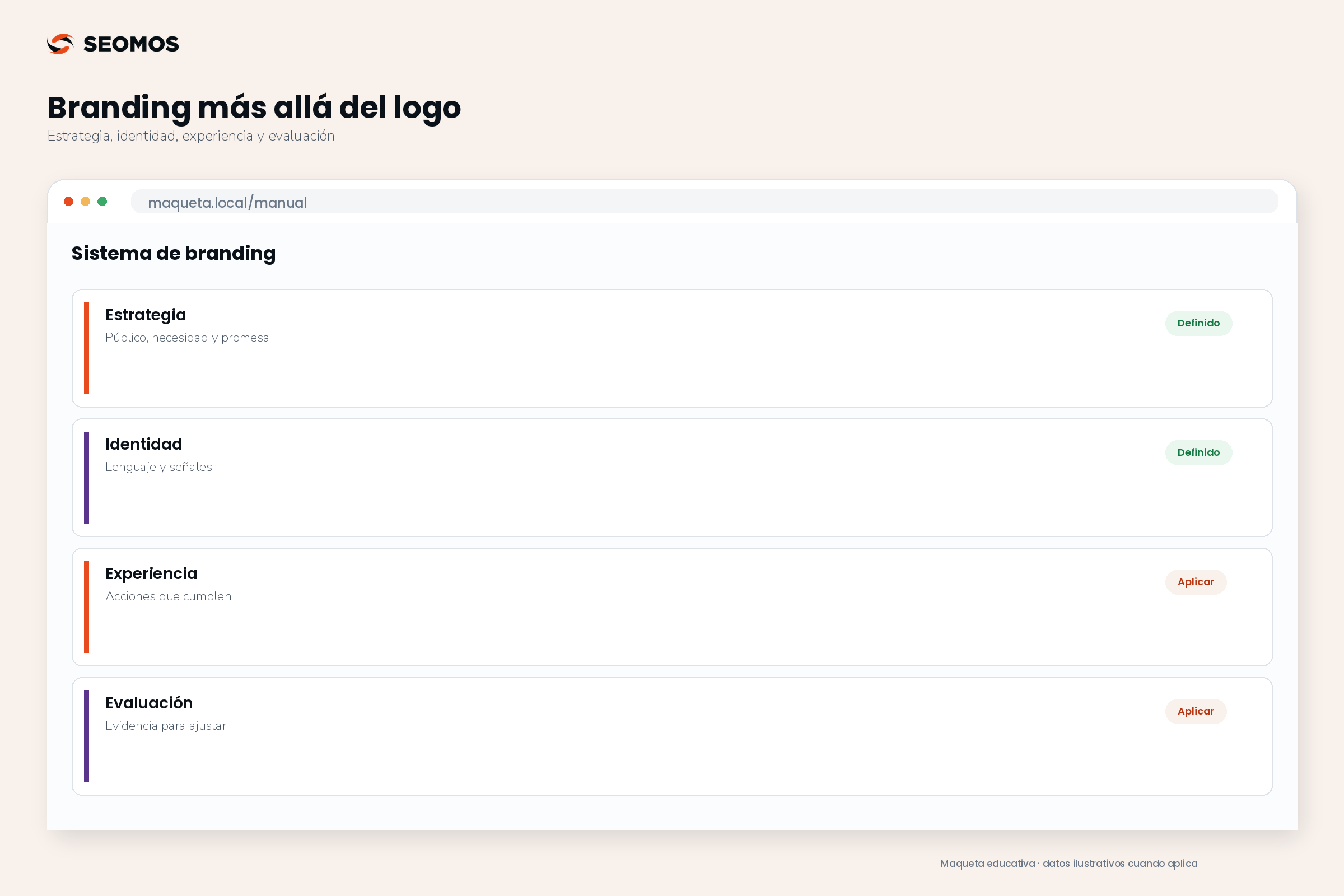
The elements of a useful branding strategy
Audience, need and context of choice
Describe specific situations, not just ages or cities. A store buying packaging for its first season has different concerns than one that needs to supply multiple locations. Their criteria might include minimum order quantities, restocking, customization, or ease of cost calculation. The brand needs to decide which situations it can handle well and which are beyond its reach.
Promise and limits of the offer
A useful promise clearly states a benefit and the conditions for achieving it. “Close attention” leaves too much room for interpretation; explaining who is involved in the process and when they respond allows for evaluation. Avoid choosing values that the team cannot translate into action. If simplicity is promised, quotes, forms, and instructions should demonstrate it.
Positioning and identity
Positioning defines a reason to consider the offer over alternatives. Identity makes it recognizable through names, messages, visual resources, and behaviors. Here, it suffices to establish its functions; the complete competitive analysis belongs to the guide of brand positioning, so as not to confuse a market decision with an aesthetic preference.
Experience and responsible
The promise is also expressed when asking for information, receiving an invoice, or resolving a return. Nielsen Norman Group It highlights the relationship between visuals, tone, and behavior in the brand experience. The practical application is to review the entire journey and assign responsibility: the designer cannot single-handedly correct a commitment that operations fails to meet.
How to do branding: a six-step process
1. Audit what already exists
Gather the homepage, social media profiles, ads, proposals, emails, and service responses. Note what each piece promises and what questions it raises. Add buyer feedback and reasons for missed opportunities, using authoritative information. Separate observations from internal opinions: “three proposals use different names for the same service” is evidence; “the brand feels outdated” needs explanation.
2. Research how customers make decisions
Ask what happened when they sought help, what they compared, what gave them confidence, and what almost prevented them from buying. Avoid leading the conversation with questions like, “Do you like our personalized service?” Exploratory conversations are useful for identifying hypotheses; a small sample doesn't automatically represent the entire market. Look for both satisfied customers and people who chose another alternative.
3. Define a brief brand platform
Document your target audience, the problem you address, your proposal, its evidence, and three guiding principles. Include what you don't promise. The document should help approve or reject real decisions. If any competitor could sign it without changing a word, it's still too general. There's no need to turn every idea into a public slogan.
4. Translate the decisions into a system
Develop messaging, branding, and application examples based on the platform. Test a mobile display, a sales proposal, and a challenging response. These formats reveal contradictions that an ideal presentation might conceal. Also, define which elements should be retained and where there is flexibility to adapt campaigns, formats, and languages.
5. Implement by impact and dependency
Start with the points that affect understanding or compliance: scope of services, contact messages, and proposals. Then coordinate visual and editorial changes. Maintain an inventory of materials, responsible parties, and versions. Launching a new style while incompatible offerings are circulating creates a confusing transition; not all changes need to be made on the same day, but they do need to be made in a specific order.
6. Evaluate and adjust with evidence
Check if people understand the proposition, recognize the brand, and describe an experience that aligns with the promise. Establish a baseline before changing materials. If the results worsen, review comprehension, distribution, and fulfillment separately. A business problem may stem from pricing, availability, or the channel, without requiring a complete identity overhaul.
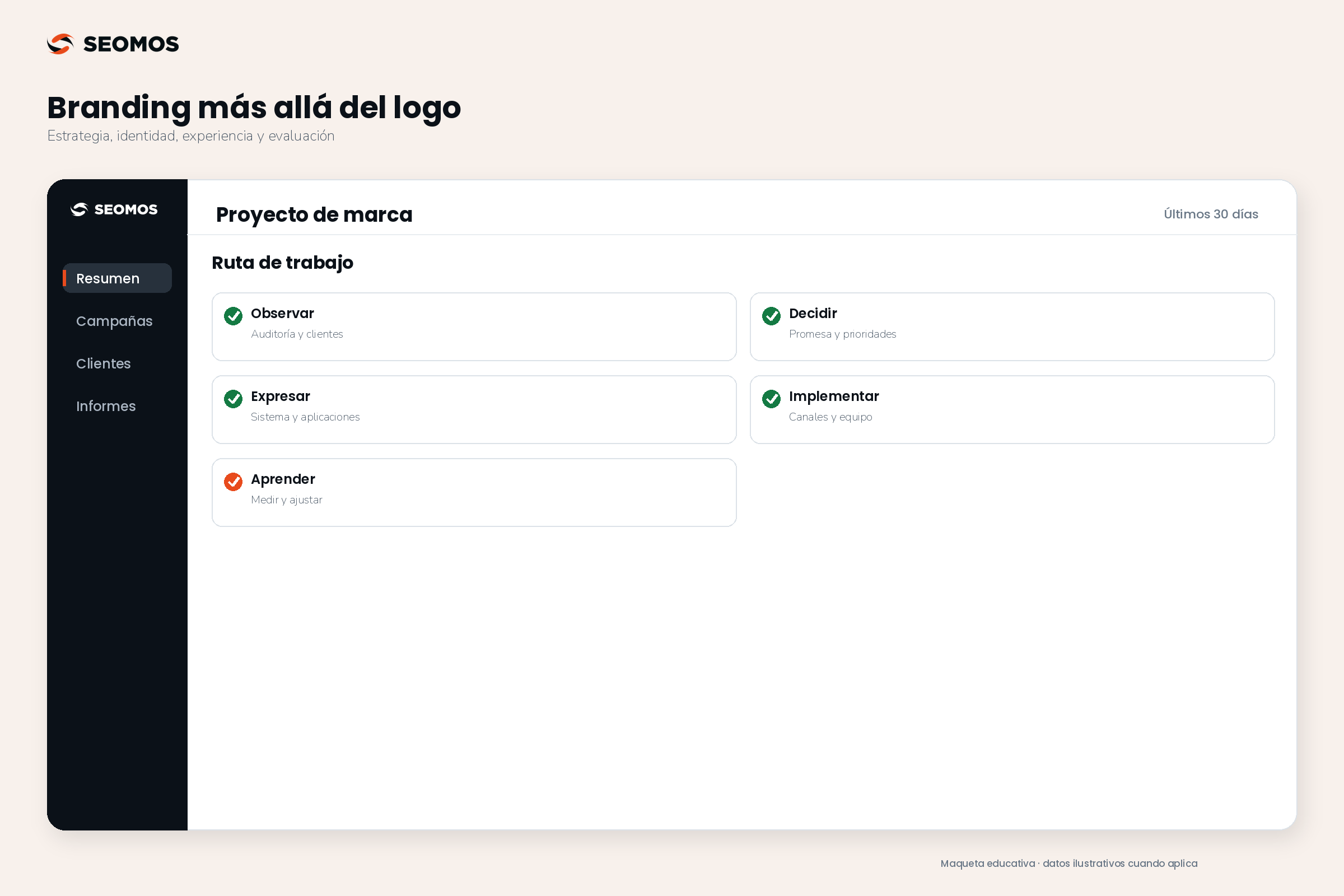
Branding example: a maintenance company
Hypothetical example: Taller Norte is a fictitious maintenance company for small businesses. Their marketing claims to offer "comprehensive solutions," but prospects repeatedly ask what a service visit includes. The parts have a consistent logo; the main problem lies in explaining and delivering the service.
The team proposes a work promise: to facilitate maintenance through clear diagnostics and an approved scope of work before any intervention. It doesn't promise to resolve every breakdown or always arrive immediately. To uphold this promise, it needs to define coverage areas, availability, and procedures for when a part needs to be ordered from a supplier.
| Decision | Application | Testing |
|---|---|---|
| Explain without confusing | Proposal with problem, scope, exclusions and next step. | The buyer can explain what they are approving. |
| Avoid surprises | Prior confirmation of additional work. | No extras are executed without acceptance. |
| Follow up | Job summary and channel for incidents. | The customer knows who to contact next. |
| To be recognizable | Consistent messages and graphic resources across the website and proposal. | The experience appears to belong to the same company. |
The branding in this example doesn't end with a new presentation. It requires coordinating sales, technical support, and customer service. A campaign can amplify the promise when these conditions exist; if they aren't yet met, the responsible approach is to limit the message. This sequence prevents the communication from generating expectations that the business cannot sustain.
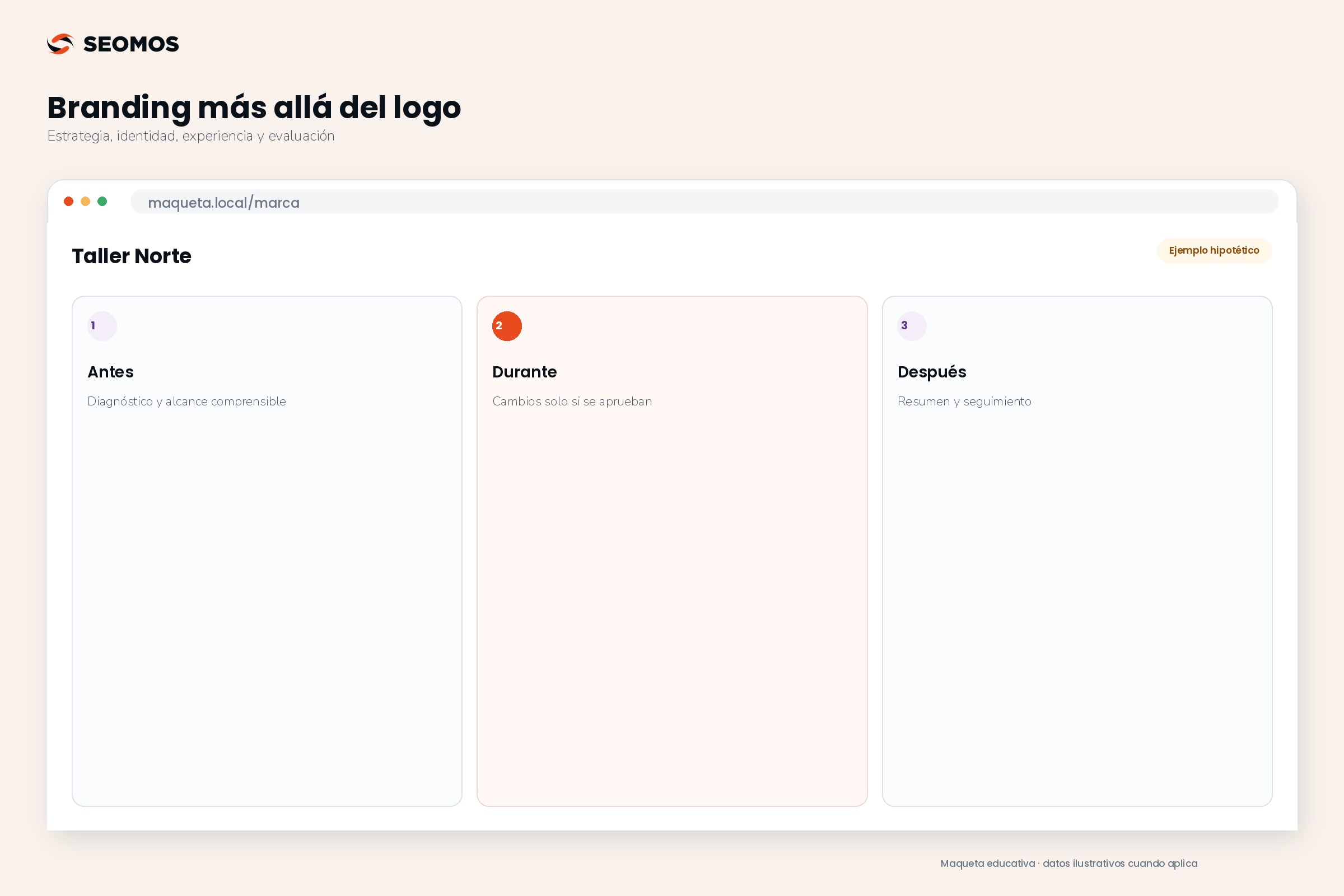
How to apply branding on the web and social media
On the web, consistency depends on the order of information, evidence, and ease of completing a task. Visitors should find a clear description, relevant terms and conditions, and a clear next step. An attractive interface that obscures the scope or makes it difficult to contact can contradict a brand that promises clarity.
On social media, adapt the format without changing the concept each week. An educational video, a commercial, and a response to a complaint all require different tones, but compatible criteria. When working on the SEO for social media, Use your audience's words to facilitate discovery without turning each post into a list of repeated terms.
For a specific campaign, a landing page You can focus the proposal and its supporting evidence. It's advisable to verify that the ad and the page describe the same benefit and conditions. This link between message and interaction is a concrete point where the UX/UI design It helps to materialize brand decisions.
How to measure branding without attributing all sales to it
Use business questions before choosing indicators. Do we want more buyers to recognize us, better understand a specialty, or find the experience consistent? Each objective requires different evidence. The Ehrenberg-Bass Institute distinguishes between recognition and exclusive partnership when evaluating distinctive assets; This reminds us that a graphic resource can attract attention without correctly identifying a company.
- Comprehension: What do people think the brand offers after reviewing a piece?.
- Recognition: if they relate specific signals to the company, using a defined test and sample.
- Consistency: incidents where a commercial promise does not match what was delivered.
- Consideration: stated reasons for including or excluding the offer in a comparison.
- Business results: relevant inquiries, sales and repeat business, interpreted in conjunction with other business changes.
Comparing a month before and a month after can guide a review, but it doesn't prove causality. Advertising investment, season, promotions, and distribution can also vary. Choose a few key indicators, assign responsibility, and record those conditions. The guide to What is a KPI? It explains how to turn a metric into a follow-up decision.
Mistakes to avoid and deliverables you do need
The most costly mistakes are usually defining the brand solely based on the team's preferences, copying a trendy aesthetic, promising attributes without proof, and constantly changing branding signals that are still being learned. It's also best to avoid a lengthy manual that no one can actually use: extensive documentation doesn't guarantee that sales, design, and service will share the same criteria.
A reasonable initial scope should include a diagnosis, a brand platform, implementation priorities, essential rules, examples, and a maintenance manager. Require that each deliverable resolve a specific decision. If you hire external support, agree on editable templates, intended uses, and implementation responsibilities; an approved concept does not equate to a fully operational solution.
Before undertaking a complete rebranding, identify what's going wrong. It might be enough to streamline the offering, clarify messaging, or improve the user experience. Changing the name or key elements requires a specific evaluation of brand recognition, transition costs, and operational implications. Aesthetic novelty alone is not a business objective.
Frequently asked questions about branding
What is branding in simple terms?
It's about organizing how a company wants to be recognized and how it demonstrates what it promises. This includes its approach, its messaging, its identity resources, and the experience it delivers. A brand is built on what it communicates and what people experience when interacting with it.
Is a logo enough to start a brand?
It can serve as an initial identifier, but you also need clarity on your offering, your target audience, and your terms of service. A small business can operate with a few well-implemented rules; it doesn't need to wait for an extensive manual to communicate and act consistently.
What is the difference between branding and advertising?
Branding guides the building and management of a brand. Advertising distributes messages through paid placements and responds to campaign objectives. A campaign can express and strengthen a brand, but it also needs the product, service, and experience to back up its promise.
How much does branding cost?
It depends on the research, pending strategic decisions, the number of brands, the channels, and the implementation involved. Compare proposals by scope and deliverables, not just by the number of pieces. Without that context, a general figure can lump together very different projects and lead to a misleading comparison.
When does a company need a rebranding?
When there's a proven problem that current tools don't solve, such as a changed proposal, a confusing architecture, or an identity that hinders necessary applications, first identify what should be preserved. A message or experience update can resolve the problem without replacing all recognition elements.
Does branding improve Google ranking?
These are different tasks. A clear brand helps organize messages and experiences, but it doesn't guarantee organic rankings. SEO requires addressing search intent, content, technical accessibility, and other specific aspects. Avoid presenting a brand identity redesign as a guaranteed improvement in traffic or ranking.
Sources consulted
Editorial consultation: 31-08-2026. The process, tables and hypothetical case in this guide are original work; the following sources support its conceptual distinctions.