
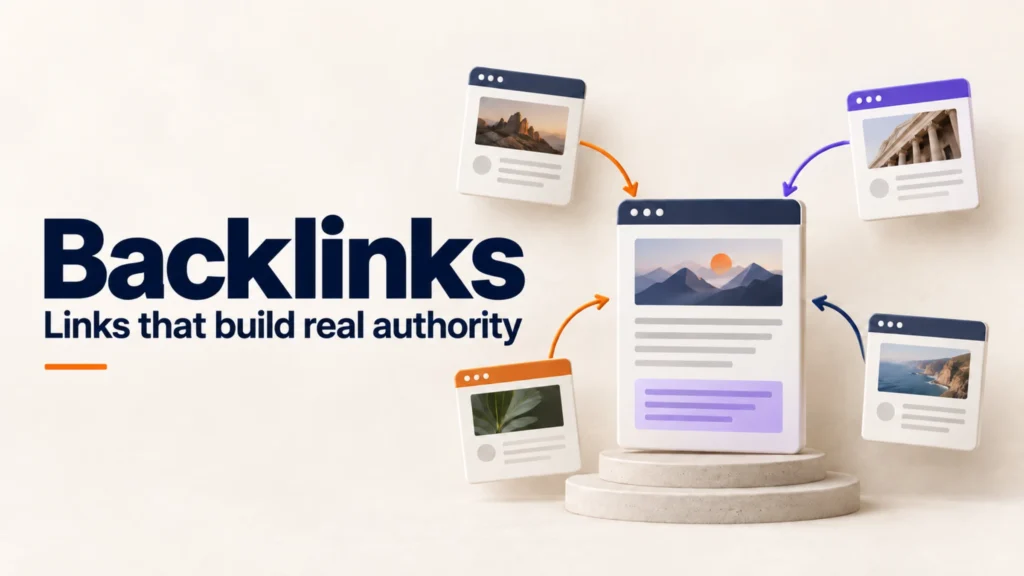
A backlink can help people and crawlers discover a page, send qualified referral visits, and show that another source found a resource worth citing. It can also be irrelevant or part of a manipulative pattern. That is why a responsible backlink strategy does not begin with a package of links. It begins with a reason to be cited and an understanding of which editorial relationships make sense.
This guide explains what backlinks are, how to evaluate quality, how to earn links sustainably, which risks to avoid, and how to audit and measure a campaign without reducing it to a third-party authority score.
What is backlink building?
Backlink building, often called link building, is the work of earning inbound links from other domains. A backlink exists when a page outside your website contains a link to one of your URLs.
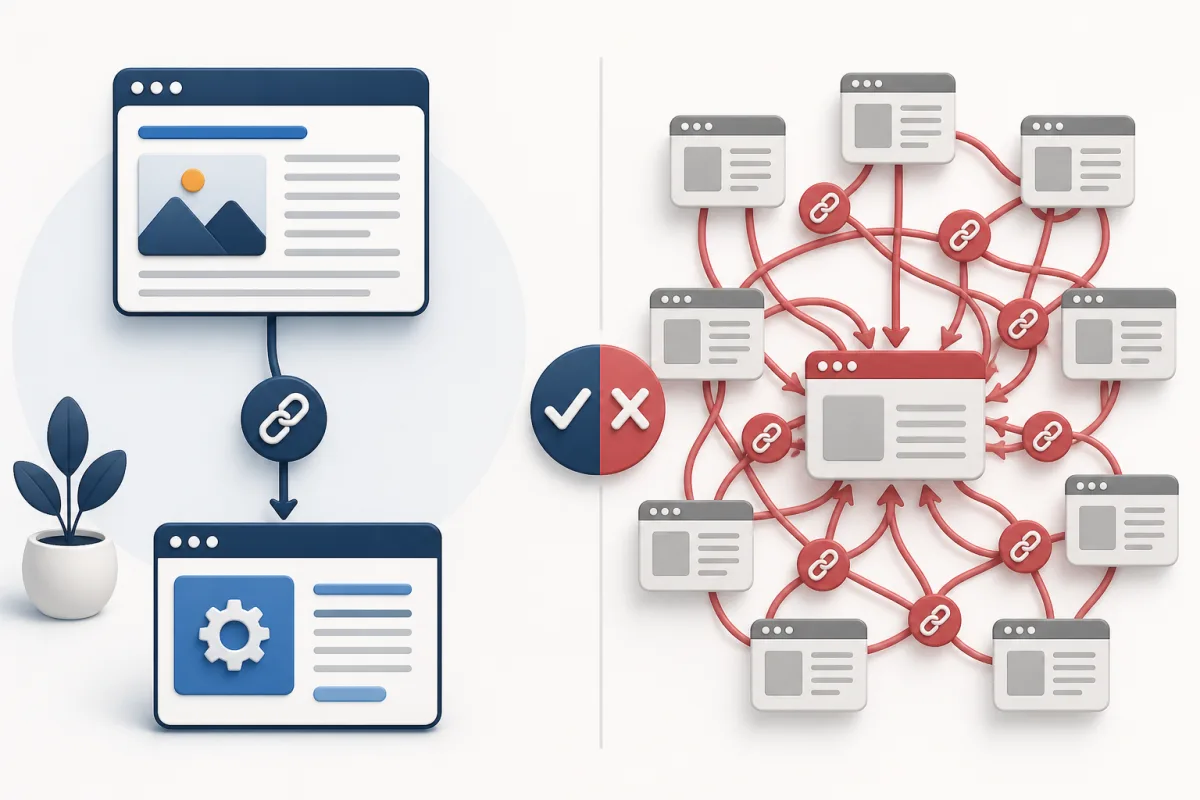
External links may support discovery, referral traffic, and context about relationships among sources and topics. However, they do not all produce the same outcome. The source page, its topical fit, the placement, anchor, destination, audience, and the naturalness of the broader pattern change how useful a backlink can be.
Backlink, referring domain, mention, and citation
A backlink is each external link that points to the site. TO referring domain is the domain containing one or more backlinks. If a publication links to the same study five times, an inventory may show five backlinks but only one referring domain. This distinction prevents repeated links from being mistaken for source diversity.
A brand mention names a company, product, or spokesperson with or without a link. TO citation attributes to claim, dataset, or resource to a source. Both may create visibility and trust even without a standard link. In local SEO, the word citation may also refer to consistent business name, address, and phone records; that is different from an editorial source inside an article.
Tracking these elements separately answers different questions: how many unique websites know the resource, which pages recommend it, whether the brand is becoming visible in its field, and how much audience or business arrives from those references.
What can a backlink strategy accomplish?
- Discovery: a crawled source can lead search engines and people to a new resource.
- Referral traffic: a relevant mention may attract interested visitors even when it uses
nofollow. - Reputation: editorial citations show that a resource participates in a real industry conversation.
- Relationships: Useful collaboration can create future interviews, research, events, or partnerships.
- Asset distribution: original data, tools, cases, and methods can reach audiences that do not know the brand.
A campaign is not merely successful because the backlink count grows. One specialist reference that produces qualified opportunities may be more valuable to the business than hundreds of automated mentions with no audience.
How to identify a quality backlink
| Criterion | Useful signal | Warning sign |
|---|---|---|
| Topical fit | The mention contributes to the page's subject | The website has no relationship to the topic or audience |
| Editorial context | The link supports, expands, or attributes information | It appears alone in an unexplained list |
| Source page | It has a clear purpose, authorship, and original content | It exists mainly to publish links |
| Destination | It reaches the most useful and specific resource | It always points to a home page or irrelevant sales page |
| Anchor | It describes the destination naturally | It repeats an exact commercial phrase at scale |
| Audience | It can generate relevant discovery or visits | There are no signs of readers or real distribution |
| Pattern | Mentions grow for variety, verifiable reasons | Hundreds of similar links appear within days |
Authority metrics from SEO tools can help prioritize a review, but they cannot replace inspection of the actual page. Visit the source and evaluate its content, audience, context, and target before making a decision.
A practical framework for evaluating link opportunities
Instead of accepting or rejecting a website based on one score, evaluate the opportunity at three levels. First, the source: who publishes, for which audience, and under what editorial standards. Second, the page: whether its content is original, relevant, maintained, and genuinely distributed. Third, the link: why it appears, what surrounds it, where it leads, and whether a commercial relationship exists.
Rate each level as strong, uncertain, or weak and record evidence. A famous domain does not make every placement valuable; an abandoned or unrelated page may contribute little. A small specialist publication, by contrast, can send highly qualified visits when its article solves the exact problem faced by its community.
| Question | Yes, continue. | No: review or reject |
|---|---|---|
| Could the audience need this resource? | There is topical or functional alignment. | Only a metric or isolated keyword matches. |
| Is there an editorial reason to cite it? | It contributes evidence, data, a tool, or a method. | The only reason is a hidden payment or exchange. |
| Does the destination fulfill the promise? | It is stable, accessible, specific, and current. | It redirects, hides access, or contradicts the anchor. |
| Is the relationship transparent? | Sponsorship and user content are properly qualified. | The placement imitates independent endorsement. |
| Would it matter without an SEO score? | It can bring audience, reputation, or collaboration. | It has no purpose if ranking credit is removed. |
Backlink attributes: sponsored, UGC, and nofollow
A standard editorial link does not require a special attribute. Other relationships should be described accurately:
rel="sponsored""identifies advertising, sponsorships, and other paid placements.rel="ugc""identifies links added by users, such as those in comments or forums.rel="nofollow""may be used when a publisher does not want to associate with the destination or when the other values do not apply.
A qualified link can still generate visits, recognition, and future citations. Do not discard an editorially useful opportunity just because it is not a standard link.
Is “dofollow” an HTML attribute?
“Dofollow” is an informal term for a link that does not use nofollow, sponsored, or ugc. There is no requirement rel="dofollow"" attribute. This distinction matters in an audit because tools may label links as “follow,” while the HTML simply contains a normal anchor.
The label should also not become the only quality filter. A properly marked sponsorship can produce customers, a respected publication may use nofollow by default and still deliver meaningful coverage, and a standard link on a site built only to sell placements may represent risk.
How to earn quality backlinks
1. Create assets worth citing
Linkable content gives another source something it can use: original data, transparent research, updated statistics, authorized cases, maps, templates, calculators, glossaries, comparisons, or a clear method. A long article is not automatically citable when it merely repeats existing answers.
Before production, identify who might cite the asset and why. That question determines the format, evidence, scope, and distribution plan.
2. Build digital PR relationships
Find journalists, publications, associations, universities, suppliers, communities, and specialists that cover the problem. Offer data or expertise that helps their audience. A generic message asking for a backlink rarely creates a reason to answer.
3. Contribute to a credible source
Interviews, selective columns, events, collaborative studies, and documented expert answers can lead to useful mentions. Participate where your experience genuinely fits the editorial need, and do not distribute the same generic guest post at scale.
4. Reclaim unlinked mentions
Find mentions of the brand, products, research, or spokespeople that omit a link. If a link would help readers inspect the original source, request the update clearly and politely. Not every mention needs a backlink.
5. Recover lost or broken backlinks
Review links pointing to 404s, deleted pages, and obsolete URLs. When an equivalent exists, add a precise 301 or ask the publisher to update the destination. Do not redirect unrelated historical URLs to the home page.
6. Turn first-hand experience into public resources
Recurring customer questions, operational knowledge, anonymized data, benchmarks with a disclosed method, and simple tools can become useful sources. State limitations and never present a hypothetical example as a real client result.
7. Analyze competitor link gaps with editorial judgment
Identify sources that cite multiple competing resources but not yours. Do not copy the list into a mass-email tool. Review what they cited, why it fit, when it was published, and what your resource would need to offer as a legitimate alternative. The right action may be improving the asset, contributing newer data, or adding a local perspective.
8. Find broken links you can genuinely replace
When a relevant page links to a missing source, investigate what the old resource contained. Suggest your URL only when it satisfies the same need or improves on it, and identify the broken reference precisely. Publishing a superficial copy only to claim the placement creates no lasting value.
9. Activate real partner ecosystems
Suppliers, authorized clients, associations, chambers, technology integrations, academic programs, and events can produce natural references when there is a relationship to document. Examples include an integration page, an approved joint case, an association member profile, or conference materials. Do not require commercial anchor text as a contract condition.
10. Publish reusable tools and resources
A template, calculator, dataset, diagnostic method, or interactive visualization may solve a task better than another generic article. Include instructions, assumptions, update dates, and a stable URL. Promote it to people who already teach or solve that exact problem.
How to get backlinks without buying placement
A link can involve no placement fee and still require a real investment. Research, data production, tool development, expert responses, and relationship building all require time and expertise. A better question is which investment creates an asset that continues to be useful after the first mention.
Lower-cost starting points include reclaiming mentions, repairing your own broken destinations, contributing expert sources, publishing data the business already owns, and documenting existing partnerships. Free directories make sense only when real people use them to find organizations in that field or location. Submitting to hundreds of empty directories creates noise and inconsistent records.
Which pages should a link-building campaign promote?
Transactional pages are not always the most citable. Publishers have more reasons to reference a study, tool, or definitive guide than a page whose only purpose is selling. Many strategies therefore work in two stages: earn references to a useful asset, then use contextual internal links to connect relevant services, categories, and supporting resources.
- Original research: useful when the sample, period, and methodology are transparent.
- Tools and templates: help an audience complete a specific task.
- Reference guides: answer a question comprehensively and remain maintained.
- Authorized case studies: demonstrate process, limitations, and verifiable outcomes.
- Commercial pages: can earn links when they are the natural destination, such as an official integration or cited supplier.
Before outreach, verify that the page identifies its author or owner, cites primary sources, loads correctly on mobile, has a stable URL, and includes an update plan. Earning links to an asset that will quickly become obsolete creates future maintenance debt.
How to write outreach that offers value
A strong outreach email demonstrates that you understood the publication. It should be concise, specific, transparent, and easy to decline. Do not hide a commercial relationship or claim to have read an article when a tool only extracted its title.
Subject: updated data for your guide to [topic]
Hi [name], in the section about [exact reference], you explain [idea]. We published [resource] with [data, tool, or method] that may help your readers [specific benefit]. You can review it here: [URL]. If it does not fit your editorial criteria, no change is needed. Thank you for maintaining the resource.
Personalization is not replacing the recipient's name. It means explaining the relationship between one exact section and the proposed resource. Record replies, rejections, and reasons. If many editors say the asset adds no new evidence, the issue may be the offer rather than the email template.
How to plan a backlink campaign
- Define the outcome: discovery, referral traffic, brand visibility, citations, or support for a strategic URL.
- Select the destination: choose a complete, stable, fast, useful page for the source audience.
- Study the environment: identify who cites similar resources and the editorial reasons behind those citations.
- Create or improve the asset: contribute evidence or utility that is not interchangeable with any article.
- Segment contacts: group sources by topic, audience, and collaboration type rather than sending an indiscriminate blast.
- Present the value: explain what the resource contributes and why it may help the publication's readers.
- Record outcomes: track replies, mentions, URLs, attributes, referral activity, and next steps.
- Maintain the asset: update data, repair references, and keep the cited source available.
Campaign example: turning internal data into a citable asset
Imagine an ecommerce company with two years of anonymized product-return data. A responsible campaign would not publish isolated numbers or customer information. It first defines a useful question, cleans and aggregates the data, documents the sample, and obtains the necessary approvals. It then publishes a report with findings, limitations, and downloadable charts.
Outreach is segmented among retail publications, industry associations, logistics providers, and specialists who already cover returns. Each receives an angle relevant to its audience. The company tracks citations, links, downloads, qualified traffic, and commercial conversations. The next year, it updates the series on the same URL. The backlink becomes a consequence of maintaining a source, not the campaign's only product.
Backlink practices to avoid
Google's spam policies for links identify patterns whose primary purpose is manipulating search results. Warning signs include:
- Buying or selling links intended to pass ranking signals without qualification.
- Exchanging links excessively without an editorial reason.
- Using automated software or services to create links across many sites.
- Publishing scaled articles with forced commercial anchors.
- Joining directories or networks created mainly to link.
- Hiding links or inserting them without the publisher's editorial control.
- Promising a guaranteed authority score, ranking, or huge volume within days.
Paid collaboration can be legitimate when it is disclosed and uses the appropriate attribute. The problem is not advertising; it is disguising advertising as an independent editorial recommendation in order to manipulate rankings.
Toxic backlinks, negative SEO, and disavowal
“Toxic” is a label used by tools, not an automatic official classification from Google. A suspicious domain deserves review, but its score alone does not provide a penalty. Publish websites attract irrelevant links, scrapers, and spam without requesting them. Removing or disavowing everything in response may create more harm than the observed pattern.
Separate links the company created or controlled from links that appeared without their involvement. If there is a manual action, a history of purchased links, or a deliberate pattern that cannot be removed, document URLs, contact attempts, and decisions. Google warns that its disavow tool is advanced and may hurt performance when used incorrectly. Do not upload a file merely because a third-party dashboard displays an alert.
How to audit backlinks
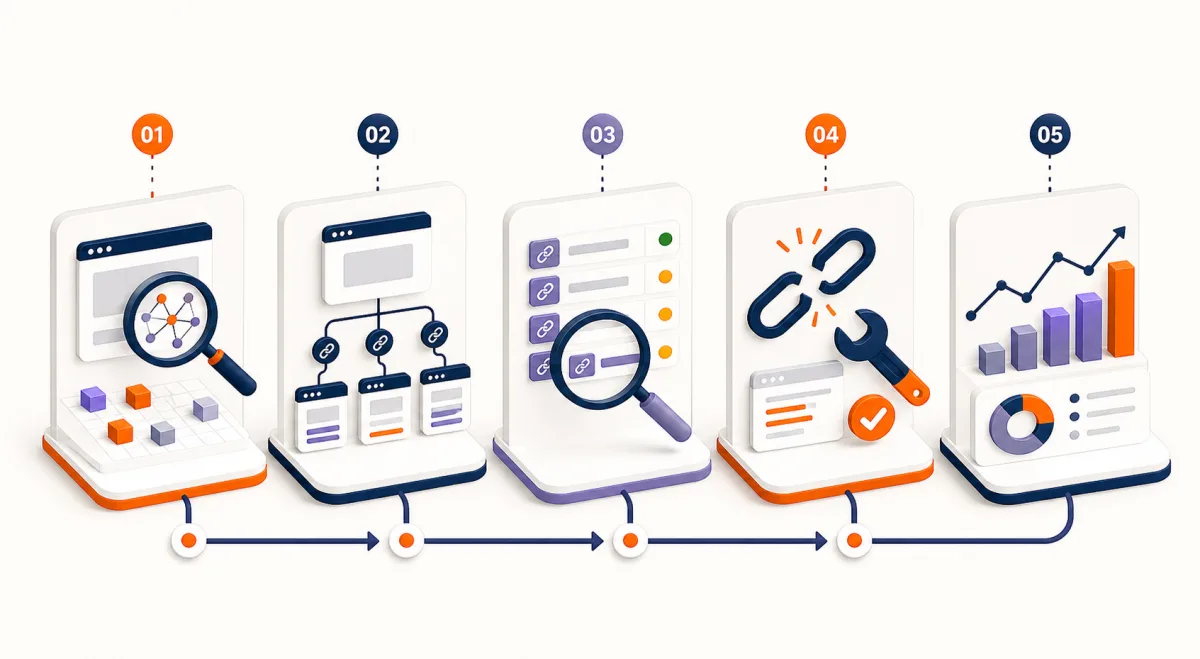
Start with an inventory of referring domains, source pages, targets, anchors, attributes, and first and last detection dates. Then manually inspect the sources representing the greatest opportunity or risk.
- Confirm that the source page exists, is accessible, and contains the link.
- Evaluate topical relevance, editorial context, authorship, and audience.
- Verify that the target returns 200, declares the correct canonical, and remains equivalent to the citation.
- Separate new, lost, broken, sponsored, and user-generated links.
- Review anchor patterns, repeated sources, and unexplained growth.
- Compare the inventory with referral traffic, conversions, and brand mentions.
- Prioritize recovery, correction, publisher contact, or documentation.
| Situation | Decision | Verification |
|---|---|---|
| Active, useful editorial link | Keep it and maintain the relationship | Target is 200, context is current, and traffic is relevant. |
| Backlink to a deleted URL | Restore, redirect to the equivalent, or request an update | Do not use the home page when it does not match the intent. |
| Unlinked brand mention | Request a link only when it helps readers inspect the source | The request improves the publication. |
| Sponsorship without qualification | Request sponsored or nofollow |
The commercial relationship becomes transparent. |
| Unsolicited spam | Document and observe before acting | Do not confuse a tool warning with a manual action. |
| Company-created manipulative link | Remove or qualify it; consider disavowal with expertise | Review policy and scope before submitting a file. |
Do not automatically disavow every strange link. Google says its systems may already ignore many unnatural links, and its disavow tool is intended for specific situations. Review the official disavow-links documentation before considering it.
Metrics for evaluating a backlink strategy
- Relevant referring domains earned and lost.
- Backlinks reaching the correct strategic destination.
- Referral traffic, engagement, and assisted conversions.
- Editorial mentions of the brand, team, data, or resources.
- Broken links recovered and obsolete targets corrected.
- Natural diversity among sources, destinations, and anchors.
- Impressions, clicks, and queries for promoted pages.
Use third-party metrics as diagnostic indicators, not as the final objective. Outcomes should connect to discovery, audience, reputation, relationships, or business value.
How to report outcomes without inflating the campaign
Separate activity, quality, and outcome metrics. Activity includes prospects researched and assets produced. Quality includes accepted mentions, relevant domains, editorial context, and correct destinations. Outcomes include referral traffic, branded searches, registrations, assisted sales, and new partnerships. This prevents a report from presenting one hundred sent emails as one hundred earned opportunities.
Compare periods and annotate content updates, campaigns, migrations, and seasonality. In Search Console, observe the promoted URLs, but do not attribute every click increase to one backlink. In analytics, preserve the referrer and use campaign parameters only when the publication accepts a measurable link without harming the experience.
A useful report also shows losses: removed links, broken targets, outdated assets, and relationships that require maintenance. Sustainable authority includes preserving the qualities that earned the original reference.
How backlinks and internal links work together
A backlink may bring visitors and discovery to one URL, but that page must connect to the rest of the website. Internal linking lets a cited guide lead to its method, related resources, and relevant services. It also prevents promoted assets from remaining isolated.
To organize those internal paths, read the complete guide to internal linking and website architecture.
Frequently asked questions about backlinks
What is backlink building?
It is the work of earning links to your website from other domains through useful resources, relevant relationships, distribution, and credible editorial mentions.
What is the difference between backlinks and internal links?
Backlinks come from other domains, while internal links connect pages on the same website. They complement each other but require different objectives, tactics, and audits.
Can nofollow backlinks be useful?
Yes. They can create discovery, visits, recognition, and future mentions. Evaluate the audience and editorial context, not only the link attribute.
Can buying backlinks hurt a website?
Yes, when links are bought to manipulate rankings and are not qualified as sponsored. Link-spam patterns may be ignored or lead to action under Google's policies.
How many backlinks do I need?
There is no universal number. Competition, topic, content quality, and source relevance change the context. Prioritize usefulness and fit over volume.
How long does backlink building take?
It depends on the industry, assets, and existing relationships. Initial mentions may arrive within weeks, while a diverse and sustainable reputation generally requires ongoing work.
Should I disavow every low-quality backlink?
No. Disavowal is an advanced measure for specific situations and may cause harm when used incorrectly. Review the context and official guidance first.
Is dofollow an HTML attribute?
No. It is an informal label for a normal link without nofollow, sponsored, or ugc. You do not need to add rel="dofollow"".
Can backlinks be earned without paying for placement?
Yes, but research, resource production, and relationship building still require time. Start with useful assets, credible source contributions, and relevant existing partnerships.
Is a home-page backlink better than a deep link?
The link should reach the page that best fulfills the editorial promise. A cited study should link to the study; a general company profile may reasonably link to the home page.
Conclusion
Sustainable backlink building creates reasons for other sources to mention a resource. Prioritize useful assets, relevant relationships, transparent commercial arrangements, and strong destinations. Evaluate every opportunity by context and audience, not only by an authority score.
If you need to turn content, digital relationships, and site architecture into a measurable authority plan, explore our SEO services.